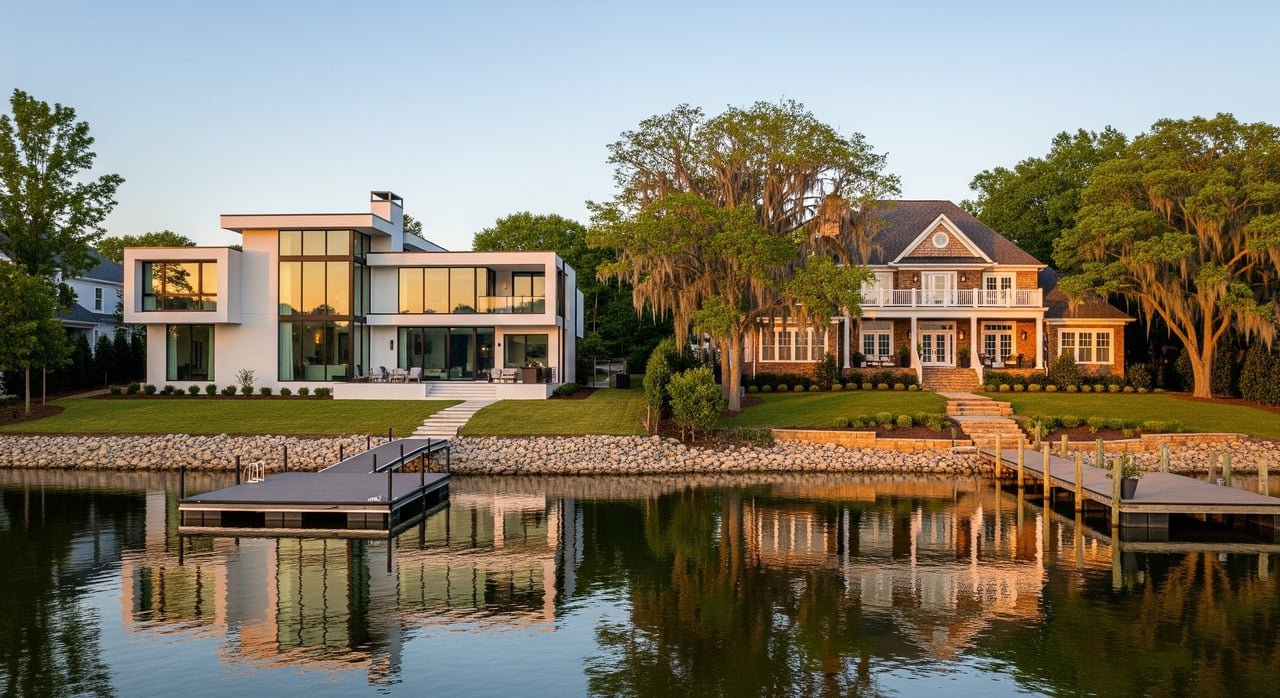
Are you torn between building your dream home or buying a move-in ready property at The Point in 28117? You’re not alone. Many Lake Norman buyers want the lifestyle, but the path to get there can feel complicated. In this guide, you’ll learn how new construction compares to resale at The Point, what to verify first, and how to run the numbers with confidence. Let’s dive in.
The Point: what to verify first
Before you compare homes, confirm how The Point’s community and lake rules affect your budget and timeline.
- Club and membership structure. Ask whether membership is mandatory or optional, what the initiation and annual dues are, and how boat slip access works. Confirm transfer rules and any member caps or waitlists.
- HOA and architectural control. Review CC&Rs, bylaws, current dues, budgets, reserve studies, and recent meeting minutes. Pay attention to short-term rental restrictions, exterior material rules, dock and shoreline standards, and any special assessments.
- Parcel, zoning, and shoreline. Use the Iredell County GIS and parcel records to verify lot boundaries, setbacks, easements, flood zone status, and whether the lot is on septic or sewer. Confirm dock or seawall eligibility and whether slips are deeded, leased, or managed by the club or marina.
- Local comps and market timing. Pull recent, like-kind sales within The Point from the past 3 to 6 months. Compare by lakefront vs interior, lot size, year built, and finished square feet.
- Permits and ARB approvals. Contact Iredell County Building Inspections and the community Architectural Review Board to understand steps and timelines. Many lake neighborhoods add design review steps that extend schedules.
New construction at The Point
Building new can be ideal if you want customization and modern efficiency. It also adds time and planning. Here’s what to expect.
Timeline and process
- Lot selection and contract. 2 to 6 weeks to identify a lot and negotiate a contract.
- Architectural review. 2 to 8 weeks for ARB design approvals, depending on submittal cycles.
- County permits and utilities. 2 to 12 or more weeks based on permit queues and site work needs.
- Construction. Spec builds often take 4 to 8 months. Custom builds commonly run 8 to 18 months or more, influenced by builder workload, weather, material availability, and lakefront site complexity.
- Final steps. Inspections, punch list, Certificate of Occupancy, final walk-through, and closing.
Costs beyond the base price
When comparing a new build to a resale, use the true out-the-door number. Key items to include:
- Lot premium or separate lot price, especially for waterfront or view lots.
- Upgrades and options, like appliance packages, stone counters, flooring, porches, and landscaping.
- Site work for lake lots, including grading, retaining systems, erosion control, and potential seawall permits.
- Impact fees, water or sewer taps, septic design and install where applicable, and utility extensions.
- Builder-required finishes and allowances. Verify what is included versus allowance amounts.
- Driveways, fencing, exterior lighting, and landscape completion.
- Carrying costs if you need temporary housing during the build.
- Closing costs, property taxes on completed value, and furnishings.
Financing for a build
Most buyers use either a construction-to-permanent loan or a stand-alone construction loan that converts to a long-term mortgage at completion. Expect:
- Higher down payment requirements than a typical resale purchase.
- Interest-only payments during construction, with draws released as milestones are inspected.
- An appraisal based on completed value and a distinct underwriting timeline. Get preapproved early so your lot and builder contracts align with lender requirements.
Risk and protections
- Builder warranties. Many builders provide a year of workmanship coverage, two years for systems or mechanicals, and a longer structural warranty. Review terms and transferability.
- Change orders. Small adjustments can add cost and extend schedule. Lock in selections early and track change orders.
- Builder vetting. Check past projects, references, and lien practices. Ask about current workload and supply timelines.
New construction: pros and cons
Pros
- Custom floor plans and finish choices.
- New systems and energy efficiency typically reduce near-term maintenance.
- Builder warranties that cover early defects.
- Potential to time a move with an existing spec home.
Cons
- Longer wait before you can move in.
- Carrying costs during construction and possible temporary housing.
- Final price can climb with upgrades and change orders.
- Premium pricing in highly desirable lake neighborhoods.
Buying resale at The Point
Resale can be a faster, simpler path to Lake Norman living with established landscaping and neighborhood character.
Timeline and process benefits
- Typical closings happen within 30 to 60 days once inspections and financing are complete.
- You can move in immediately after closing.
- Depending on market conditions, you may negotiate on price, repairs, or closing costs.
Cost profile and near-term expenses
- Purchase price may be lower than a similar new build, but factor in maintenance for older systems.
- Budget for immediate items like HVAC tuning or replacement, roof age, water heaters, dock or seawall repairs, and landscape refresh.
- Include HOA or club transfer fees and any capital contributions.
Lake-specific inspections and due diligence
Plan a thorough inspection package tailored to shoreline living:
- General home inspection for structure, electrical, plumbing, and HVAC.
- Septic evaluation and well water testing where applicable.
- Termite or pest inspection, plus mold or asbestos checks where relevant.
- Dock and shoreline review to assess permits, seawall integrity, and any erosion.
- Flood risk review with FEMA mapping and an Elevation Certificate if available.
- Title and survey check for easements, encroachments, shared access, or shared docks.
- Insurance and loss history research to understand past claims.
Resale: pros and cons
Pros
- Faster occupancy and simpler financing.
- Mature landscaping and established neighborhood feel.
- Historical comps to guide pricing and resale expectations.
- Opportunity to buy high-end upgrades already in place.
Cons
- Potential for near-term repairs and capital projects.
- Less customization of layout and finishes.
- Older systems may have shorter remaining life and higher energy use.
Compare first 5 years of costs
Use a side-by-side worksheet so you’re comparing apples to apples.
- Set the baseline price.
- New construction total equals base price plus lot cost, upgrades, impact or permit fees, landscaping, and closing costs.
- Resale total equals negotiated price plus inspection-negotiated repairs and closing costs.
- Project annual carrying costs.
- Mortgage principal and interest, property taxes, homeowners insurance, HOA dues, and any club dues. Include maintenance expectations, utilities, and lawn or shoreline care.
- Remember taxes for a new build often adjust once the home is completed.
- Add one-time and episodic items.
- Dock or seawall work, septic replacement, roof cycles, major appliances, and any special assessments.
- Account for construction financing.
- For new builds, estimate interest-only payments and fees during the build period.
- Consider resale value.
- Use recent neighborhood comps to model conservative appreciation scenarios. Quality docks, shoreline stabilization, and timeless finishes can support future value.
Decision guide: which path fits you?
Ask yourself these practical questions to choose your best route at The Point:
- Timeline. Do you need to move within months? Resale is usually the better fit. Can you wait 6 to 18 or more months? New construction is on the table.
- Customization. Do you want to design plan details and finishes? Building offers the most control.
- Budget and cash flow. Are you comfortable with construction loan interest, temporary housing, and out-of-pocket upgrades? If not, resale may be more practical.
- Amenities and membership. Do you need a boat slip, golf, or club access on day one? Confirm whether new builds provide immediate access or if waitlists apply.
- Ownership horizon. Long-term owners may recoup a new-build premium. Shorter-term owners may prefer resale value and speed.
- Risk tolerance. Are you comfortable with construction variability and change orders, or do you prefer the certainty of a completed home?
Buyer checklist for The Point
Use this list to stay organized from first showing to closing.
- Request the full HOA and master association pack, including CC&Rs, budget, reserve study, meeting minutes, and current dues.
- Contact the club or membership office to confirm categories, initiation fees, annual dues, transfer policies, and boat slip availability.
- Pull recent MLS comps within The Point matched by frontage, lot size, age, and square footage.
- Order a flood zone check and obtain an Elevation Certificate if the property is near the shoreline.
- For new builds, request the builder’s standard features list, upgrade pricing, lot premium schedule, warranty terms, and examples of completed homes.
- For resale, require septic records, dock permits, seller disclosures, and a full home inspection with septic and dock specialists.
- Build a 5 to 10 year life-cycle cost comparison for both scenarios before you write an offer.
The bottom line
Both paths can be smart at The Point. If you want maximum customization, energy efficiency, and warranty protection, new construction delivers, as long as you plan for time and variable costs. If you need speed, proven neighborhood comps, and established landscaping, a well-vetted resale can get you on the water sooner. In either case, the winning move is to verify HOA and club terms, shoreline rights, and build or inspection timelines early.
If you want a side-by-side breakdown tailored to your goals and budget, reach out to the local, broker-led team you can trust. Get a Free Home Valuation or Call Robin for Local Market Guidance. Start the conversation with Zema Realty.
FAQs
How long does new construction at The Point typically take?
- Most buyers should plan for 8 to 18 or more months for a custom build, plus time for architectural review and county permits. Spec homes can be faster.
What inspections are essential for a resale lake home at The Point?
- In addition to a general home inspection, plan septic evaluation, well water testing where applicable, termite or pest inspection, dock and seawall review, and a flood risk check.
Do all homes at The Point include club membership or a boat slip?
- Policies vary. Verify with the club and HOA whether membership is mandatory or optional, how slips are assigned, and whether waitlists or caps apply.
How should I compare the total cost of a new build vs resale in 28601?
- Build a five-year worksheet that includes price, upgrades, permits, financing carry, taxes, insurance, HOA and club dues, maintenance, utilities, and episodic items like dock or roof work.
What financing should I expect when building at The Point?
- Many buyers use construction-to-permanent loans with interest-only payments during the build, then convert to a standard mortgage at completion.
Are there special shoreline or dock rules in Iredell County I should know?
- Yes. Confirm dock eligibility, permits, and shoreline stabilization requirements with county records, HOA rules, and the community or club office before you write an offer.