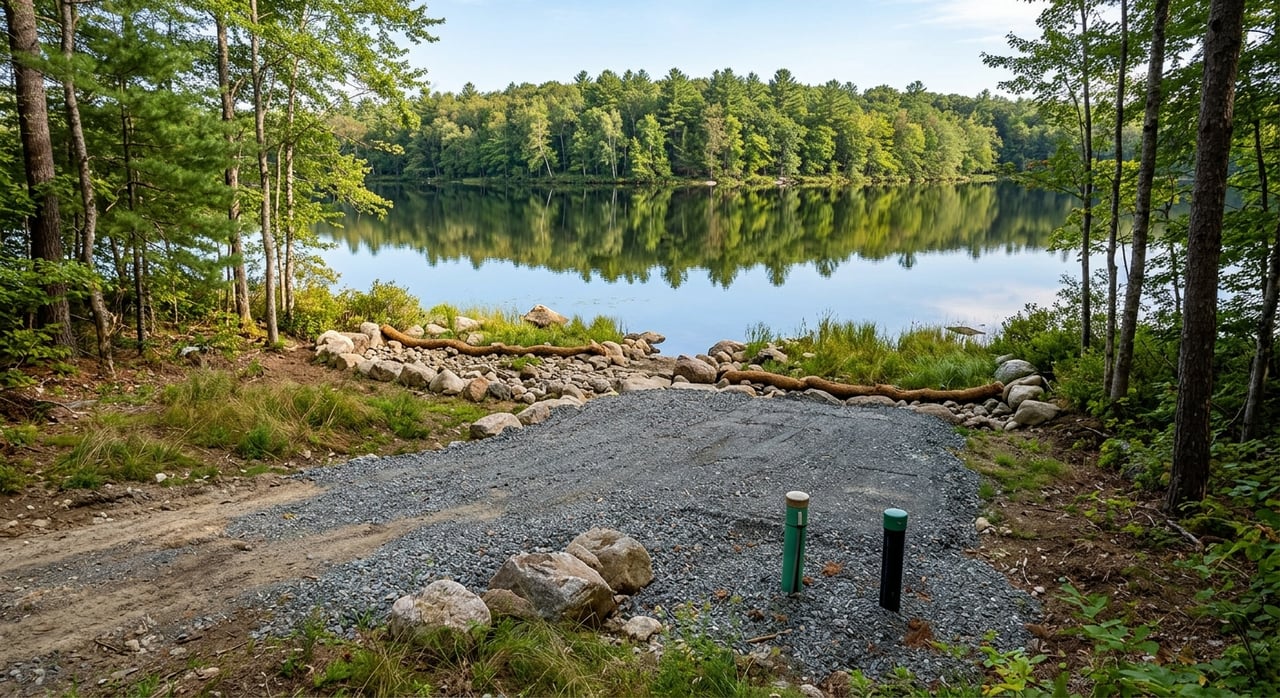
Buying a waterfront lot in Paradise Harbor can feel simple at first. You see the water, picture the view, and start planning your dream home. But in this Lake Rhodhiss community, a great lot is about more than scenic frontage. It also needs to work with community rules, county permits, shoreline requirements, and your day-to-day lifestyle goals. If you want to buy with confidence, here’s what to look for before you make an offer. Let’s dive in.
Start With Buildability
A waterfront lot can look impressive on paper and still be hard to build on. In Paradise Harbor, the best lot is usually the one that gives you a clear, practical path from purchase to construction.
The community materials describe several design limits that matter early in your search. These include site-built homes only, a 1.5-acre minimum lot size, minimum heated living area standards based on story count, and a maximum lot coverage of 30 percent. That means you need enough usable land to fit a compliant home plan without major redesign.
Acreage alone does not tell the full story. Buffers, easements, slope, and shoreline contours can reduce the true building envelope. A lot may offer plenty of privacy and beautiful water views, but still leave you with a smaller buildable area than expected.
Check HOA Rules Early
In Paradise Harbor, community rules shape what makes a lot valuable. The Architectural Review Committee oversees design and landscape changes, and the rules emphasize quality construction that blends with the natural setting.
That matters because your home design, grading plan, tree removal, and other visible site changes may need to fit community expectations. If you are comparing lots, look for one that supports your preferred home style without forcing you into major compromises.
The rules also affect future flexibility. Paradise Harbor limits rentals to long-term arrangements of at least 90 contiguous days, and unimproved lots cannot be leased. If you are hoping for short-term rental use or broad investor flexibility, that is an important factor to understand before you buy.
Look Beyond Waterfront Footage
On Lake Rhodhiss, shoreline shape and elevation often matter more than the number of waterfront feet. A lot with a usable shoreline and a stable home site may be more practical than one with longer frontage but more restrictions.
The Paradise Harbor permit package says lots bordering the lake follow the 1,000-foot contour, with a flood easement extending to the 1,010-foot contour. It also describes a 65-foot lake buffer, including the first 30 feet left undisturbed and the outer 35 feet limited in use. If a creek is involved, a 100-foot riparian buffer may apply as well.
These details can make a major difference in how close you can build, where you can place a driveway, and how much yard space you really have. In other words, a scenic lot still has to work on paper.
Pay Close Attention to Slope
A sloped waterfront lot can be beautiful, but slope needs to be evaluated carefully. You want a lot that supports the house site, drainage, and access, not just the view.
Final grading should slope water away from the home so stormwater does not damage the foundation. That means the lot needs to support a sensible building pad and drainage plan. If the homesite is too constrained, construction costs and design challenges can rise quickly.
Driveway access matters too. A lot may have water views from nearly every angle, but if getting from the road to the homesite is difficult, the lot may become less practical and more expensive to improve.
Protect the Natural Setting
One of Paradise Harbor’s biggest draws is its natural character. The community rules emphasize preserving rolling hills, mature trees, wildlife, and shoreline.
That preservation focus affects what you can do with the land. Trees larger than 6 inches at breast height require approval before removal, and shoreline disturbance is closely regulated. If you are dreaming of opening up a dramatic panoramic view, make sure you understand what can actually be cleared.
In many cases, shoreline vegetation is part of the lot’s long-term value. It helps preserve the setting, supports erosion control, and maintains the wooded lakefront feel that draws many buyers to Paradise Harbor in the first place.
Understand Shoreline Permits
If your plans involve clearing vegetation, disturbing land, or building near the shoreline, Burke County requirements are a big part of the equation. The county requires a shoreline protection permit for work within the Lake and River Overlay District.
This is not a detail to sort out after closing. The permit process can affect your build timeline, design decisions, and site costs. Noncompliance can lead to civil fines, stop-work orders, or delays in occupancy.
Because Lake Rhodhiss is part of Duke Energy’s Catawba-Wateree reservoir system, shoreline changes tied to docks, piers, stabilization, or excavation should also be checked with Duke Energy Lake Services before work begins. For buyers, this means a waterfront lot should be evaluated with both community and shoreline approvals in mind.
Verify Utilities and Service Access
A strong waterfront lot should have a clear utility strategy. Paradise Harbor homeowner materials describe Spectrum bulk service with buried fiber or coax pedestals and a service box attached to the home, but buyers should still confirm the exact service path for the specific lot.
For new construction in Burke County, zoning approval comes first. The county states that a zoning permit must be approved before Environmental Health or building permits are issued. Environmental Health also oversees septic and private well review.
If the lot will rely on a private well, the permit application shows how site-specific the review can be. It asks about wetlands, easements, rights-of-way, underground utilities, drainage features, existing wells, and wastewater systems. A well permit is valid for five years, but the county notes that water quantity and quality cannot be guaranteed.
Review Septic and Water Questions
With waterfront land, septic and water planning should never be treated as a small detail. The homesite, drain field, well location, setbacks, and slope all need to work together.
Burke County also has a Lake Rhodhiss-specific subdivision rule stating that when part of a subdivision lies within 250 feet of the lake reference line, lots generally must be served by public central water and sewer, though some larger single-family lots are exempt. Floodplain regulations may also apply.
That is why lot evaluation should include more than a visual walk of the property. You want to understand whether the site layout supports the systems your future home will need.
Think About Boating Access
Not every waterfront lot delivers the same boating experience. In Paradise Harbor, scenic waterfront and functional boat access are not always the same thing.
The marina rules state that Paradise Harbor Marina Club members have pedestrian access to docks and piers and temporary daytime mooring, but no overnight mooring. Boat use also requires decals, registration, insurance, and compliance forms.
If boating is a major part of your lifestyle, a lot with convenient marina access or a deeded slip may offer more day-to-day value than a lot chosen for the view alone. This is one of the most common waterfront trade-offs buyers overlook.
Match the Lot to Your Home Plan
A smart lot purchase starts with a realistic home plan. In Paradise Harbor, it helps to think about the house and the lot together, not as separate decisions.
The strongest lot is usually the one that can satisfy HOA standards, county permits, shoreline rules, and your design goals at the same time. That may mean prioritizing a wider building area, better driveway placement, or easier utility access over the most dramatic raw shoreline.
Orientation can matter too if natural light is important to you. Guidance on passive solar design notes that windows facing within 30 degrees of true south can support solar gain, and the south side should not be blocked by trees or future buildings. That may be worth considering if you want a bright interior or are planning with energy efficiency in mind.
Consider Resale From Day One
The best waterfront purchases usually balance your personal goals with future market appeal. In Paradise Harbor, resale value is often strongest when a lot offers shoreline usability, permitting simplicity, and a home site that fits the community well.
Lots that force major redesigns, extensive disturbance, or complicated approval paths may still work for the right buyer, but they often have a narrower audience later. By contrast, a lot with a clean build path and clear lifestyle value tends to appeal to more future buyers.
In this community, that often means owner-occupants, second-home buyers, and long-term holders. Since short-term rentals are not allowed, resale may depend less on rental income potential and more on how well the lot supports everyday lake living.
If you are looking at waterfront land in Paradise Harbor, the goal is simple. You want a lot that looks great, works well, and fits the rules without unnecessary friction. That kind of lot can save you time, protect your budget, and give you a much better building experience.
Working through shoreline details, HOA standards, and county permit questions before you buy can make all the difference. If you want a local, hands-on guide for Paradise Harbor and Lake Rhodhiss waterfront property, connect with Zema Realty.
FAQs
What makes a waterfront lot buildable in Paradise Harbor?
- A buildable lot in Paradise Harbor usually has a practical homesite, enough usable area for a compliant site-built home, workable slope, utility access, and room to meet lake buffers, easements, and community standards.
What are the rental rules for Paradise Harbor lots and homes?
- Paradise Harbor does not allow short-term rentals under 90 contiguous days, unimproved lots cannot be leased, and completed homes may be leased only on a long-term basis.
Why do shoreline buffers matter for Paradise Harbor waterfront lots?
- Shoreline buffers matter because they can reduce the true buildable area of a lot, limit clearing and disturbance, and affect where you can place the house, driveway, and outdoor improvements.
Do you need permits for shoreline work in Burke County?
- Yes. Burke County requires a shoreline protection permit for certain vegetation removal, land-disturbing activity, and construction within the Lake and River Overlay District.
How important is marina access in Paradise Harbor?
- Marina access can be very important if boating is part of your lifestyle, since marina club rules allow pedestrian access and temporary daytime mooring but do not allow overnight mooring.
What utility questions should you ask before buying a Paradise Harbor lot?
- You should confirm zoning path, septic and well requirements, utility routing, service availability for the specific parcel, and whether any site conditions could affect permits or construction timing.